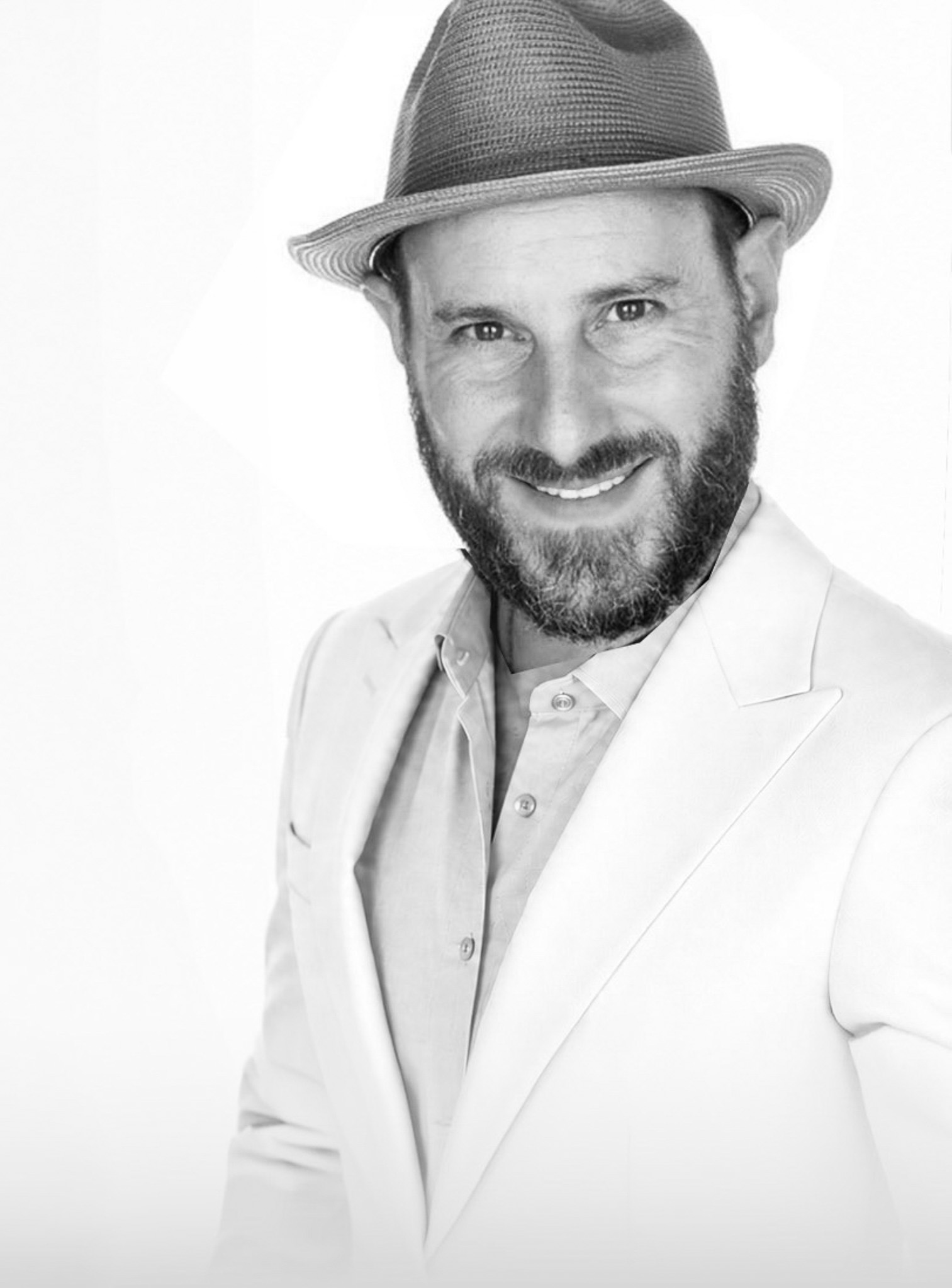
A healthier planet. A life’s work.
My work began in the environmental movement. After college, I worked as an environmental lobbyist for a nonprofit, running campaigns on water policy and public reform across the United States. The questions were practical and consequential: how we use shared resources, whose interests shape the decisions, and what it takes to turn public concern into lasting change.
That early commitment has stayed with me. Climate stabilization has been a thread through my life, including the years when my day-to-day work was building technology companies. I have kept returning to the same possibility: that we can create ways of living that give people more opportunity while restoring the health of the planet.
I also spent a year as an investigative journalist. The work asked me to follow a question beyond its first answer, to listen closely, and to examine the evidence. Later, at Stanford, where I earned my MBA, I began building the business foundation for the next chapter of my life.
Public policy, journalism and entrepreneurship each gave me a way to pursue change. Together, they shaped the way I work today: begin with a question worth asking, understand the people it touches, and stay with the work long enough to make something useful.
Learning to see what comes next.
I spent the next twenty years building in Silicon Valley: three venture-backed AI companies and two exits. Along the way, my companies were backed by Sequoia Capital, Andreessen Horowitz, Lux Capital, Google Ventures and In-Q-Tel. Those years gave me experience with the full arc of company building, from an early idea to a team carrying it into the world.
In 2014, I co-founded Orbital Insight. Satellite imagery was opening an extraordinary window onto Earth. Working in a field developing alongside companies such as Planet Labs, we helped turn that imagery into a way of understanding change at a scale people could act on.
We built technology to automate the analysis of satellite images. Our customers included investors, insurers, environmental organizations, the World Bank and real estate businesses, and later the intelligence community and military. The applications were varied. The underlying opportunity was shared: help people see patterns in the world and make better decisions with what they learned.
Orbital Insight grew to 120 employees and was eventually acquired by Privateer, the space company co-founded by Steve Wozniak. My work building Orbital Insight and Deep Discovery deepened my respect for the distance between a technical insight and an enduring company. Crossing that distance takes judgment, patient execution and people who can keep learning together.
That experience is central to Burnwater. When I meet a founder with an ambitious idea, I bring an understanding of the work ahead: assembling the team, proving the technology, finding the customer and carrying the responsibility of leading.
Energy sits underneath so much of what we want to accomplish.
The resource beneath everything.
By 2020, my curiosity was drawing me toward energy. The environmental questions I had begun with were meeting the possibilities I had come to understand as a founder. Energy sits underneath so much of what we want to accomplish. It determines the cost of moving water, growing food, making materials and keeping a community running.
I began meeting inventors exploring compact fusion, wireless power and ideas at the edges of established energy research. Those relationships brought me closer to people working on difficult questions, often while their ideas were still taking shape. I followed that inquiry into opportunities that included a company founded by NASA’s former head of propulsion research.
The further I went, the more clearly I saw the role I wanted to play. I could bring the experience of building companies, a network of people willing to think deeply, and the discipline to ask what a promising result actually meant.
Burnwater grew out of that conviction. I wanted to build a serious venture firm for people pushing the boundaries of physics, chemistry and engineering, with a purpose clear enough to guide every decision: expand access to abundant energy and human freedom.
Free as in freedom.
I believe access to abundant, clean energy belongs within everyone’s reach. I think of it as a birthright: a foundation for health, opportunity and participation in the world. Bringing that possibility closer to reality is the largest leadership responsibility I have taken on.
Energy freedom means giving people and communities a greater say in how their power is made, delivered and owned. It means a school that can count on its electricity, a business that can plan its future, and a community with more control over an essential part of daily life.
That is what sovereignty means to me. Our lives are deeply interdependent. We flourish through relationships, cooperation and shared effort. Local energy ownership can strengthen those relationships by bringing consequential decisions closer to the people who live with them.
I am drawn to technologies that can make that possible: generation near the point of use, storage that makes power dependable, and new ways to deliver energy where conventional infrastructure is difficult to build. Each advance can give people more agency. Together, they can change the range of choices available to a community.
Each advance can give people more agency.
Curiosity. Evidence. Commitment.
My approach begins with openness and moves toward evidence. I want to hear the idea in its strongest form, understand what the inventor has observed, and then ask careful questions. What has been demonstrated? What can be repeated? Who needs it? What must happen next?
Some of the research that interests me is highly experimental, including attempts to explore useful energy effects associated with the quantum vacuum. I treat these as questions for investigation. Measurements, independent validation and repeatable results determine how an idea advances. The strength of a claim has to grow with the strength of the evidence.
I work across two horizons: technologies moving into the market today and breakthroughs that could expand tomorrow’s possibilities. Each requires its own milestones, timescale and kind of support. My job is to understand where a company stands and help it take the next meaningful step.
I also work as an executive coach to founder CEOs, and I bring that practice to the founders I back. Leadership is personal work. The ability to listen, make a difficult decision, build trust and stay grounded under pressure shapes what a company can become.
Resonance is a recurring idea in the technologies I encounter. In my own life, it offers a useful metaphor for alignment: my values, words and actions reinforcing one another. I want to practice the clarity and responsibility I ask of the people I support. That is how I hope to bring the right minds together around work that matters.
An energy system a community can own.
The scale of the need keeps the work concrete. Across Sub-Saharan Africa, the ambition to connect hundreds of millions of people to electricity makes clear how much there is to build. I see an opportunity for systems that can reach communities quickly, operate reliably and put ownership close to home.
One concept we are exploring is a Micro-Grid in a Box: a power system designed to travel in a container and become a local source of electricity. The vision brings together generation, storage and wireless delivery, including the possibility of airborne infrastructure supported by heated air.
The engineering challenge is to make such a system practical in the places it would serve. It would need to be straightforward to deploy, resilient in severe weather, affordable to maintain and suited to local operation. Every part of that promise has to earn its place through development and testing.
What compels me is the human possibility. A community able to produce and manage its own power gains a foundation on which to build. That is the kind of sovereignty I want Burnwater to help make real: useful, everyday capacity in the hands of the people who depend on it.
What becomes possible from here.
As clean energy becomes cheaper and more abundant, the effects reach far beyond electricity. Desalination can bring fresh water within reach of more communities. Carbon removal can become more practical. Materials can stay in circulation. Food can be grown closer to the people who need it. Even the possibilities for accessing space can expand.
I see energy freedom as the entry point and abundance as the horizon. Progress will come through many kinds of work: scientific discovery, careful engineering, capable companies and the relationships that allow a good idea to become useful at scale.
My own path has brought me from environmental campaigns to satellite imagery, from building AI companies to supporting people pursuing new sources of power. The commitment running through it is the same: a healthier planet and a wider field of possibility for the people who live here.
At Burnwater, I get to bring that experience to the next generation of inventors and founders. I want to help them ask better questions, build stronger companies and carry their work into the world. That is where I am putting my energy now.
Jeffrey Stein
FOUNDER, BURNWATER VENTURES